
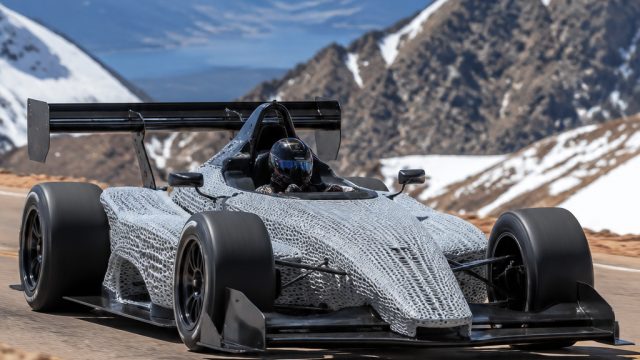
In a remarkable advancement for automotive engineering, a cutting-edge 3D-printed body shell has been developed specifically for the prestigious Pikes Peak race. This new shell, composed of 34 individual components made from high-temperature nylon, is set to redefine the standards of performance and design within the racing community. As the clock ticks down to this year’s event, the implications of this innovation are profound, not only for the competitors but for the entire automotive industry.
The Significance of 3D Printing in Automotive Design
The utilization of 3D printing technology in the automotive sector is not a novel idea; however, its application in high-stakes environments like racing represents a pivotal evolution. The Pikes Peak International Hill Climb, known for its challenging terrain and rapid elevation changes, demands vehicles that can not only perform well but also withstand extreme conditions.
High-Temperature Nylon: A Game Changer
The choice of high-temperature nylon for the construction of the body shell is particularly noteworthy. This material offers a unique combination of lightweight properties and durability, which is crucial in racing scenarios. Unlike traditional materials, it can withstand the high thermal and mechanical stresses encountered during competition, ensuring that the vehicle maintains optimal performance throughout the race.
Reduced Production Time and Costs
- 3D printing allows for rapid prototyping, making it easier to iterate designs quickly.
- By minimizing waste material, production costs are significantly lowered.
- The ability to create complex geometries that would be impossible to achieve with traditional methods enhances design flexibility.
Impacts on Racing Strategy and Performance
As we approach the Pikes Peak race, the insights gained from this pioneering approach are beginning to shape strategies among competitors. Teams are keenly observing how the 3D-printed shell performs under race conditions. The lightweight design affects not only speed but also handling, making it a critical factor for race-day performance.
Enhanced Aerodynamics and Handling
The innovative design possibilities offered by 3D printing allow for more aerodynamic shapes that can significantly reduce drag. For instance, the ability to create specific contours and surfaces tailored for optimal airflow can lead to better stability and control of the vehicle at high speeds. This aspect is vital for the steep and winding roads of Pikes Peak.
Looking Ahead: The Future of 3D Printing in Racing and Beyond
The implications of this technology extend far beyond just racing. As 3D printing becomes more mainstream, it could revolutionize how vehicles are designed and manufactured across the automotive industry. With its potential to create highly specialized parts on-demand, manufacturers might lean towards a more sustainable approach, reducing both inventory costs and environmental impact.
Potential Innovations on the Horizon
- Integration of smart materials that adapt to changing conditions.
- Collaboration with software to design parts that enhance performance dynamically.
- Expansion into customization for consumers, allowing for tailored vehicle enhancements based on individual driving styles.
In conclusion, the introduction of a 3D-printed body shell for the Pikes Peak race car is a landmark moment in the realm of automotive engineering. As teams prepare for the race, the anticipation surrounding this innovative design serves as a reminder of the evolving landscape of racing technology. With advancements like these, the future of both racing and everyday automotive manufacturing looks brighter than ever.