
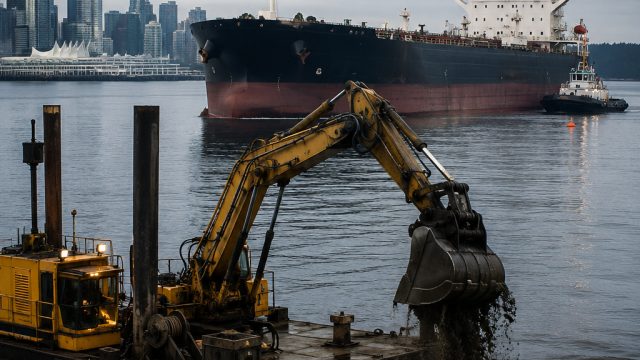
The Vancouver Fraser Port Authority has officially announced the approval for dredging the Burrard Inlet, a crucial step aimed at accommodating larger oil tankers associated with the Trans Mountain pipeline. This decision has sparked discussions among environmentalists, industry stakeholders, and the local community about the implications for both the economy and the ecosystem.
Understanding the Dredging Plan
This dredging project, slated to commence in September, will take place along the northern and southern edges of the navigation channel beneath the Second Narrows bridge in Vancouver. The primary objective is to enhance the capacity for Aframax-class tankers, which are significant players in the crude oil transport sector. These vessels can stretch up to 250 meters in length and typically require a draft of around 16 meters.
What Are Aframax Tankers?
Aframax tankers are particularly designed for transporting large volumes of oil. While the standard operational load for these vessels is about 80% of their full capacity, the dredging will allow them to load more fully, thus enhancing economic efficiency.
Why This Matters Now
The approval comes at a critical time as global energy demand continues to evolve, pushing the need for improved logistics and transportation solutions. Increasing the capacity of oil tankers at the Westridge Marine Terminal is expected to streamline operations and potentially lower shipping costs for oil producers. However, this has also raised alarms regarding environmental consequences and local wildlife.
The Environmental Impact
Opponents of the dredging project voice concerns about the potential disruption to the marine ecosystem. The Burrard Inlet is home to diverse wildlife, including salmon and various bird species. Environmental assessments conducted prior to the dredging approval suggest measures will be implemented to mitigate adverse effects, but critics remain skeptical about their efficacy.
Community Reactions
The community's response is mixed. Proponents argue that the economic benefits derived from enhanced oil transport capabilities will create job opportunities and boost local businesses. However, many local residents are advocating for stronger environmental protections to ensure that economic advancement does not come at the expense of the area's natural beauty and ecological health.
Key Stakeholders' Perspectives
- Port Authority's View: The Vancouver Fraser Port Authority emphasizes the necessity of this project to maintain competitive shipping operations in a rapidly changing market.
- Environmental Groups: Many groups are calling for a comprehensive review of the potential environmental impacts and are urging local authorities to consider alternative energy options.
- Local Businesses: Business owners are optimistic, believing that increased shipping capabilities will lead to economic growth and stability.
Future Considerations
As the dredging project moves forward, it will be essential to monitor both its economic impacts and environmental consequences. The balance between development and ecological preservation will be a central theme in the discussions surrounding the Burrard Inlet. Stakeholders will need to work collaboratively to ensure that the benefits of increased oil transport do not overshadow the vital need to protect the local environment.
Conclusion
Ultimately, the approval of the dredging in Vancouver's Burrard Inlet marks a significant moment in the intersection of economic growth and environmental stewardship. As operations begin, all eyes will be on how effectively the Port Authority addresses the various challenges that arise, ensuring a sustainable approach to expanding the region's oil transport capabilities.