
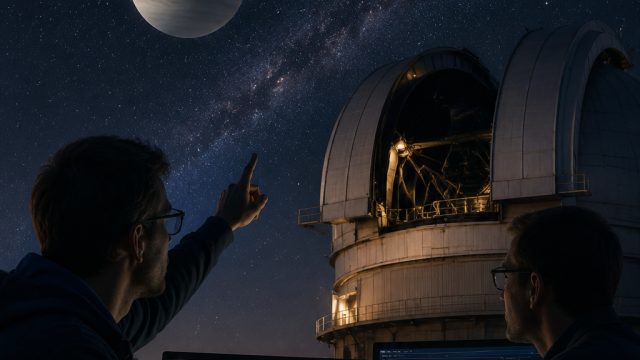
In a groundbreaking revelation, astronomers have identified the largest super-puff planets ever discovered, showcasing densities so low that they are lighter than cotton candy. This remarkable finding not only challenges existing theories of planet formation but also opens new avenues for understanding the diversity of planetary systems beyond our own.
What Are Super-Puff Planets?
Super-puff planets, characterized by their extremely low density, have long intrigued scientists. They are primarily composed of gas, giving them a fluffy appearance. Unlike traditional gas giants, these planets have a much lower mass, leading to a unique set of physical properties. Their discovery has sparked interest in how such planets can exist without collapsing under their own gravity.
The Latest Discoveries
Recent studies have revealed several instances of super-puff planets that push the boundaries of our understanding:
- Record Size: The newly discovered super-puff planets are the largest of their kind, revealing unexpected details about their structure.
- Density Comparisons: The densities of these planets are so low that they rival some of the lightest materials known, leading to comparisons with substances like cotton candy.
- Formation Theories: Current theories must be reevaluated to account for the existence of these massive yet lightweight planets, challenging established notions of how planets form.
The Importance of These Discoveries
The identification of these super-puff planets is crucial for several reasons:
- Understanding Planet Formation: These discoveries may provide insights into the processes involved in the formation of planets, particularly in environments with unique conditions.
- Exploring Planetary Diversity: The existence of such planets adds to the diversity of known planetary systems, suggesting that our universe might be home to an even broader range of planetary types than previously thought.
- Future Research Directions: The findings encourage further research into the atmospheres and compositions of super-puff planets, potentially leading to advancements in exoplanet studies.
Research Methodology
The discoveries were made using advanced astronomical techniques, including:
- Transit Method: This method involves detecting dips in starlight as planets pass in front of their parent stars.
- Radial Velocity: This technique measures variations in a star's motion due to gravitational influences from orbiting planets.
- Direct Imaging: Innovative imaging techniques allow astronomers to capture images of planetary bodies directly, enhancing our understanding of their characteristics.
Conclusion: A New Era in Astronomy
The discovery of these record-setting super-puff planets marks a significant milestone in the field of astronomy. As scientists continue to analyze these intriguing celestial bodies, we may uncover valuable information about their compositions and behaviors, transforming our understanding of the universe. This research not only enhances our knowledge of planetary systems but also underscores the dynamic nature of scientific inquiry, encouraging the ongoing exploration of the cosmos.
Stay tuned for further updates as astronomers delve deeper into the mysteries of these super-puff planets, revealing insights that could redefine our perspective on the universe.