
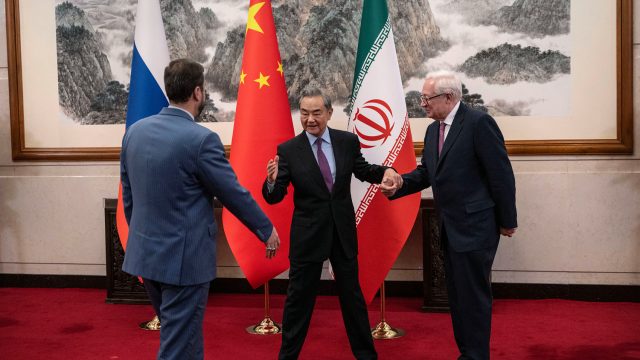
Key Takeaways
- China’s trade with Iran continues despite U.S. sanctions.
- Beijing leverages its economic ties to counter Washington’s influence.
- The geopolitical landscape is shifting in favor of non-Western alliances.
- China's strategic investments in Iran bolster its regional influence.
- Future U.S.-China relations hinge on managing these complexities.
The Current Landscape of U.S.-Iran Relations
The relationship between the United States and Iran has been fraught with tension, particularly following the imposition of sanctions which have aimed to cripple Iran's economy. However, China's involvement complicates this narrative as it continues to engage economically with Tehran. As of 2023, reports indicate that China's imports of Iranian oil have only increased, illustrating a clear defiance against U.S. pressure.
Economic Dynamics at Play
In recent years, China has emerged as Iran's largest trading partner. The two nations have formed a strategic alliance that allows Iran to circumvent some of the repercussions of U.S. sanctions. For instance, in 2022 alone, bilateral trade reached approximately $15 billion, showcasing a robust economic relationship that is resistant to external pressures.
China's Strategic Maneuvers
The key to understanding China's approach lies in its ability to wield significant leverage. The Chinese government has invested heavily in infrastructure and energy projects in Iran, positioning itself as an indispensable partner. This investment not only provides Iran with much-needed economic support but also strengthens Beijing's influence in the Middle East.
Implications for Global Trade
The ongoing tensions between the U.S. and Iran, coupled with China's strategic positioning, have far-reaching implications for global trade. As China continues to foster its relationship with Iran, it may lead to a realignment of trade routes and economic partnerships in Southeast Asia and beyond. This shift could also empower other nations to seek alternatives to U.S. hegemony in global markets.
Future Outlook
Looking ahead, the dynamics of U.S.-China relations will be crucial in shaping the geopolitical landscape. As Beijing and Tehran strengthen their ties, the U.S. may need to reconsider its strategies regarding sanctions and diplomatic engagements. The potential for a more multipolar world, where the influence of the West is challenged, appears increasingly likely.
Challenges Ahead
Despite the advantages of its alliance with Iran, China faces challenges in navigating international norms and maintaining its global image. Balancing economic interests with diplomatic relations will be key as it moves forward in this complex geopolitical scenario.
Conclusion
China’s strategic maneuvers in response to U.S. sanctions on Iran highlight a significant shift in global economic dynamics. As Beijing continues to leverage its relationships, the implications for international trade and geopolitical stability are profound. Stakeholders must remain vigilant as these developments unfold in the coming years, particularly in the context of Southeast Asia and the broader ASEAN region.