
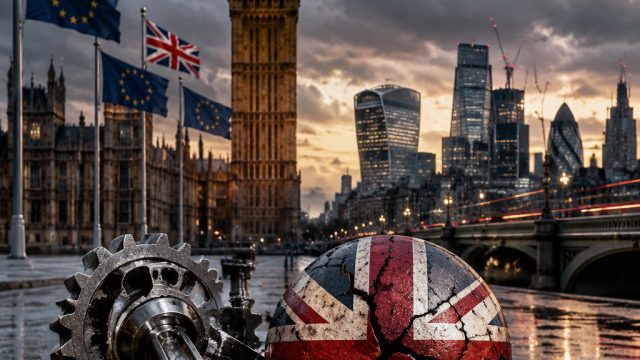
As the UK marks ten years since the Brexit referendum, the economic landscape tells a story of significant transformation and turmoil. The decision to leave the European Union has left an indelible mark on the country's economy, with analysts pointing out the long-lasting scars that have emerged in the wake of this historic vote.
The Initial Shockwaves
In the immediate aftermath of the Brexit vote in June 2016, the UK's economic future became uncertain. Confidence among businesses took a sharp decline, and investment plummeted as companies faced challenges with shifting trade regulations and market access. This initial shock set the stage for a decade of unpredictable economic conditions.
Business Investment Decline
- Immediate drop in foreign direct investment.
- UK businesses hesitant to expand due to uncertainty.
- Trade barriers causing complications for import/export.
Analysts have consistently noted that the uncertainty surrounding trade deals and the future relationship with the EU has made it difficult for businesses to plan for the long term. As a result, many companies either delayed investments or relocated operations altogether, leading to job losses and a stagnating job market.
Long-Term Economic Consequences
A decade after the Brexit referendum, the UK economy is grappling with a series of persistent issues that stem from the decision to leave the EU. The growth rate has notably slowed, with various sectors struggling to regain momentum.
Stagnating Growth Rates
According to recent reports, the UK's economic growth has lagged compared to other G7 nations. This stagnation raises questions about the long-term viability of the UK as a competitive economy on the global stage.
Political Unrest and Public Sentiment
The political ramifications of Brexit have proven just as impactful as the economic ones. A decade of political turmoil and division continues to influence public sentiment towards governance and leadership in the UK. The public's trust in political institutions has waned, leading to growing discontent among various demographics.
Public Opinion Shifts
- Growing skepticism towards political leaders.
- Calls for more transparency in governance.
- Increased activism and public demonstrations.
As citizens reflect on the past decade, many express regret over the implications of the Brexit decision. A significant portion of the population is now advocating for a reevaluation of trade policies and relationships.
Looking Ahead: The Future of the UK Economy
The road ahead for the UK post-Brexit is fraught with challenges, but there are also opportunities for rejuvenation. Analysts emphasize the importance of adapting to the new economic landscape, highlighting sectors that could drive future growth.
Potential Growth Sectors
- Technology and innovation as key drivers.
- Renewable energy sectors gaining traction.
- Opportunities in digital commerce and services.
While the scars of Brexit are undeniable, the ability of the UK to innovate and adapt will ultimately determine its economic trajectory. Embracing new technologies and exploring different markets could be the key to overcoming the challenges posed by the EU departure.
Conclusion: A Time for Reflection and Action
As the UK navigates the aftermath of Brexit, it is clear that both economic and political landscapes have been irrevocably altered. The upcoming years will be crucial for determining how the nation addresses the challenges it faces and leverages its potential for growth. Continued vigilance and proactive strategies will be essential for building a more resilient economy in the post-Brexit era.