
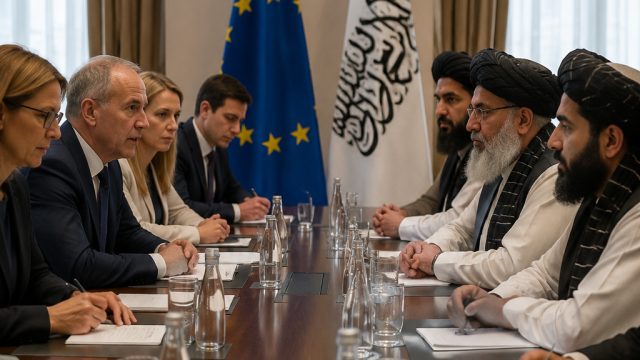
In a significant development that underscores the complexities of modern international relations, representatives from the European Union (EU) and the Taliban recently convened for closed-door discussions regarding the sensitive issue of deportations. This meeting, the first of its kind, marks a pivotal moment in the dialogue surrounding Afghanistan's post-Taliban governance and the EU's approach to its refugee policies.
The Context of the Talks
The backdrop to these discussions is fraught with urgency. Following the Taliban's swift return to power in Afghanistan in August 2021, the EU has faced mounting pressure to address the wave of Afghans seeking asylum in Europe. The humanitarian crisis in the region has been exacerbated by economic instability and human rights concerns, prompting European nations to reassess their strategies regarding Afghan refugees.
Understanding the EU's Position
The EU's stance is guided by a dual focus: the need to manage migration flows while upholding human rights obligations. Leaders are grappling with the challenge of maintaining a balance between securing borders and providing refuge to those fleeing persecution. The recent talks with the Taliban reflect a recognition that engaging with the new Afghan government is essential in shaping effective policies.
What the Talks Entailed
- Exploration of potential agreements on deportation procedures.
- Discussion on the safety and treatment of returnees in Afghanistan.
- Consideration of international aid and support for Afghanistan's stabilization.
Implications for Afghan Refugees
The outcome of these discussions could have profound implications for Afghan refugees seeking to start anew in Europe. If the EU and Taliban reach a consensus, it may pave the way for systematic deportations of individuals deemed unauthorized or unlawful. However, concerns remain regarding the safety and human rights of those returned to Afghanistan, a country still recovering from decades of conflict.
Challenges Ahead
One of the most pressing challenges is ensuring that the deportation process complies with international humanitarian standards. The EU must consider whether the Taliban can guarantee the safety of returnees, as reports of human rights violations under their regime continue to surface. This situation poses a significant moral and ethical dilemma for European leaders as they navigate the intricacies of these negotiations.
The Global Perspective
This meeting not only reflects the EU's approach to immigration but also reveals the broader international community's struggle to engage effectively with the Taliban. The implications of these talks extend beyond Europe, with other nations closely monitoring the developments. Countries that have historically been involved in Afghan politics and humanitarian efforts may also be influenced by the outcomes of these discussions.
Strategic Partnerships
The necessity of strategic partnerships in addressing this situation cannot be overstated. Engaging with the Taliban may serve as a means to foster stability in Afghanistan, potentially reducing the refugee crisis that has plagued Europe and surrounding regions. By establishing communication lines, the EU could work towards developing a comprehensive approach that addresses both humanitarian needs and migration management.
Conclusion: A New Chapter in EU-Taliban Relations
The closed-door talks between the EU and the Taliban signify a transformative moment in international relations concerning Afghanistan. As discussions continue, the outcomes could redefine how the EU approaches its policies on deportations and refugee support. This evolving dialogue highlights the need for empathy, understanding, and strategic decision-making in the face of a complex humanitarian crisis. The world will be watching closely as these negotiations unfold, eager to see how they shape the future for millions of Afghans.