
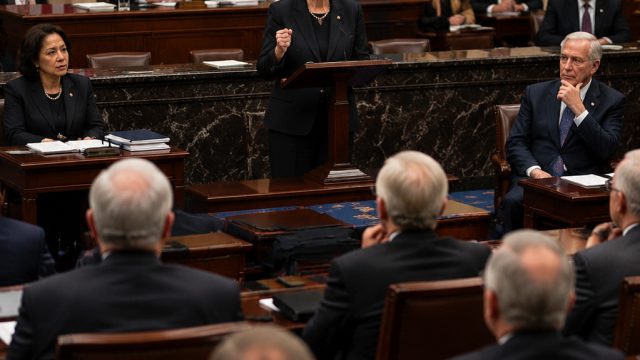
In a significant political move, the United States Senate recently voted to curtail President Trump's military authority in relation to Iran. This resolution, adopted in a rare bipartisan effort, is an assertive response to ongoing tensions in the Middle East and reflects the growing concern among lawmakers regarding unchecked presidential power in matters of war.
The Context of the Senate Resolution
The resolution stems from escalating hostilities between the U.S. and Iran that reached a critical point when Trump ordered a drone strike that killed Iranian General Qassem Soleimani in January 2020. This action significantly heightened tensions, leading to fears of a broader conflict. Now, the Senate's action reflects a desire to rein in executive power and ensure that congressional oversight remains intact.
What the Resolution Entails
- Directs the President to withdraw U.S. troops engaged in hostilities against Iran unless Congress grants approval.
- Reaffirms Congress's constitutional power to declare war.
- Encourages diplomatic solutions over military interventions.
The Political Landscape
This resolution was not only supported by Democrats but also saw a surprising level of support from four Republican senators, marking a notable moment of bipartisanship amid a highly polarized political environment. Senators voiced concerns over the implications of unrestrained military actions by the executive branch, highlighting the need for checks and balances.
Key Players in the Vote
The vote saw significant involvement from both sides of the aisle:
- Democrats: Generally united in their support for limiting Trump's powers, emphasizing the importance of congressional approval for military actions.
- Republicans: While many toed the party line, a few brave senators broke ranks to support the measure, signaling that concerns over war powers transcend party loyalty.
Implications for Future U.S.-Iran Relations
The passage of this resolution could significantly impact future U.S. engagements with Iran, as it clearly signals a preference for dialogue over military action. Lawmakers are pushing for a reassessment of the current strategy in the region, advocating for a more diplomatic approach that involves coalition-building and multilateral discussions.
The Road Ahead
Moving forward, the resolution sets the stage for a potential shift in U.S. foreign policy regarding Iran. Here are a few possible outcomes:
- The U.S. may pursue a more diplomatic relationship with Iran, focusing on negotiations over military threats.
- Congress could take an active role in shaping military strategy, ensuring that any action taken has broad support.
- The resolution might foster increased scrutiny of executive military actions in other regions, leading to a broader demand for accountability.
Conclusion: A Call for Oversight
The Senate’s vote to limit Trump's war powers regarding Iran is a timely reminder of the need for oversight in foreign policy. As tensions in the Middle East continue to simmer, this bipartisan resolution not only reinforces the legislative branch's role in military decisions but also reflects a growing consensus that war should not be waged without proper deliberation and approval. As citizens, staying informed about these developments is essential, not just for understanding U.S. foreign policy but also for recognizing the ongoing evolution of executive power in the context of national security.