
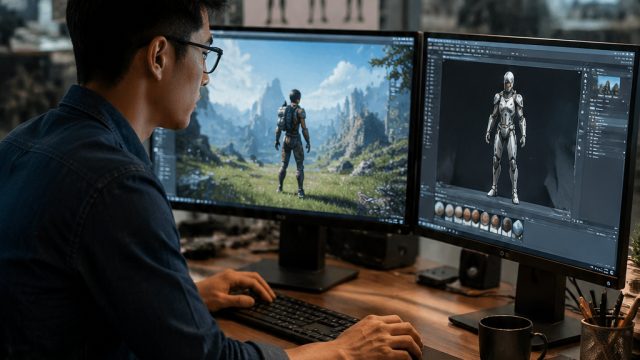
The gaming industry is on the brink of a significant transformation, driven by advancements in artificial intelligence. As we look at the latest trends, industry experts are beginning to understand the pivotal role AI could play in reshaping game development processes, making it faster and more efficient than ever before.
The Current Landscape of Game Development
In the competitive world of gaming, companies have historically managed to test only a handful of game concepts each year. However, as CEO Daniel Hasselberg highlighted, the introduction of AI technologies is promising to change that paradigm. Currently, a company of moderate size might test five or six concepts annually; with AI's capabilities, that number could realistically expand to quarterly testing routines. This could significantly streamline the development pipeline and enhance creativity in the industry.
AI's Role in Enhancing Efficiency
- Rapid Prototyping: AI can automate various aspects of game design, allowing for quicker iterations of game prototypes.
- Data-Driven Insights: Analyzing player feedback through AI can guide developers in creating more engaging content.
- Resource Allocation: AI can optimize the use of development resources, ensuring that teams focus on high-potential concepts.
Why This Matters Now
The urgency for innovation in game development is underscored by the increasing competition in the market. Players are constantly seeking fresh and engaging content, and companies must adapt quickly to meet these demands. By leveraging AI, game developers can not only keep pace but potentially lead the industry in creativity and player engagement.
Embracing Change in Game Development
As AI technologies evolve, developers must embrace these changes to stay relevant. The gaming industry has always been about pushing boundaries, and integrating AI into the development process is the next logical step. Here’s why:
- Meeting Player Expectations: Modern players expect dynamic and innovative gameplay experiences. AI helps developers produce these experiences efficiently.
- Cost-Effectiveness: Automating testing and development tasks can substantially reduce costs, allowing studios to focus more on creative aspects.
- Faster Time to Market: Shortened development cycles mean that new games can reach players more quickly, enhancing a company’s competitive edge.
Case Studies of AI Implementation
Several gaming companies have started integrating AI into their development processes, with promising results. For instance, using AI to analyze player behavior data has led to substantial improvements in game design decisions. Additionally, some studios are experimenting with AI-driven narrative development, offering players interactive experiences that evolve based on their choices.
Examples in Action
- Behavioral Analytics: Companies are using AI to analyze player actions in real-time, allowing for adjustments tailored to enhance engagement.
- Dynamic Content Generation: AI can create unique game scenarios or levels based on player interactions, leading to a personalized experience.
- Quality Assurance: AI-driven testing tools can identify bugs faster than traditional manual testing methods, ensuring a smoother launch.
Looking Ahead: The Future of Gaming
As we move forward, the intersection of AI and game development will continue to expand. Companies that adapt to these advancements will likely lead the pack, attracting a broader audience while also enhancing the quality of their offerings. The future of gaming not only holds potential for increased efficiency but also for creating more immersive and engaging experiences for players around the globe.
Conclusion
The implementation of AI in game development is not just a trend; it's quickly becoming a necessity. As developers look for ways to innovate and meet the increasing demands of gamers, AI will play a crucial role in shaping the next generation of gaming experiences. It's an exciting time for the industry, and the companies that harness these technologies will be the ones to watch in the coming years.