
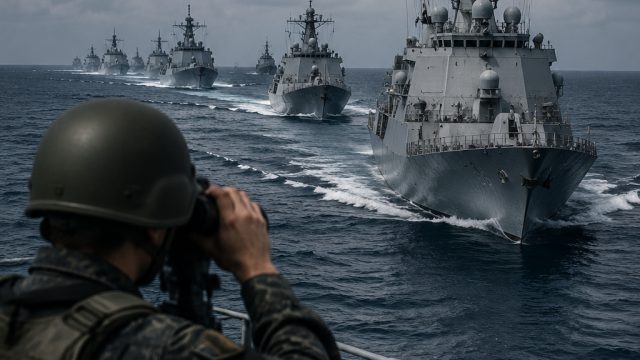
In a rapidly evolving geopolitical landscape, recent military maneuvers by China near Taiwan have sparked significant alarm among major world powers. The United States, United Kingdom, France, and Germany have collectively expressed deep concern regarding the increasing frequency and assertiveness of Chinese naval patrols in this strategically vital region. This development not only impacts regional stability in East Asia but also has far-reaching implications for global trade and security.
Understanding the Shift in Naval Dynamics
The Taiwan Strait, a critical waterway for global shipping, is now witnessing heightened Chinese naval presence. This shift has prompted coordinated responses from Western nations, emphasizing the need for a unified stance against potential aggression. The latest naval operations are underscored by the recent launch of a new aircraft carrier by China, showcasing advancements in military capability and a willingness to exert authority over disputed maritime territories.
The Importance of the Taiwan Strait
The Taiwan Strait is not only pivotal for Taiwan's security but also serves as a major transit route for international shipping. Approximately 60% of the world's container traffic passes through these waters, underscoring its importance in global trade. Any disruption in this area could have cascading effects on the global economy.
International Responses to Chinese Activities
The joint statement from the US, UK, France, and Germany highlights a growing consensus that China's actions pose a threat to the established international order. The statement calls for:
- Increased diplomatic engagement to address tensions.
- Strengthening of defense commitments to allies in the region.
- Promotion of freedom of navigation and overflight in international waters.
Such measures are seen as crucial to maintain the balance of power in the region and to deter further aggressive maneuvers by China.
The Implications for Global Trade
As tensions rise, the implications for global trade cannot be overstated. The potential for conflict in the Taiwan Strait could disrupt shipping routes, inflating costs and causing delays in the supply chain. Businesses across various sectors are urged to monitor these developments closely, as any escalation could directly affect trade flows and economic stability.
Economic Considerations for Businesses
In light of these tensions, companies engaged in international trade should consider the following:
- Assessing risk factors associated with shipping routes through the Taiwan Strait.
- Diversifying supply chains to mitigate potential disruptions.
- Staying informed about geopolitical developments to make proactive decisions.
By taking these steps, businesses can better prepare for potential challenges arising from geopolitical conflicts.
Future Outlook: Navigating a Complex Landscape
The situation surrounding Taiwan and China's assertiveness is likely to remain a focal point of international relations. As major powers continue to reassess their strategies, it is imperative for stakeholders, from policymakers to businesses, to remain vigilant. Ongoing dialogues, military readiness, and economic adaptability will be key in navigating this complex landscape.
The Role of Public Awareness and Education
Public understanding of these issues is also significant. Increased awareness can lead to more informed discussions about national security, trade policies, and international cooperation. As citizens become more engaged with these topics, it can drive demand for greater accountability and strategic foresight from leaders.
Conclusion: The Need for Vigilance and Cooperation
In conclusion, the rising tensions due to Chinese naval activities near Taiwan are a reminder of the fragile balance that exists in international relations today. The responses from Western nations highlight a commitment to maintaining stability and security in the region. As this situation unfolds, continuous monitoring and cooperation among global powers will be critical in ensuring that trade routes remain open and security is preserved. It is a pivotal moment for international diplomacy, and the actions taken now will resonate for years to come.