
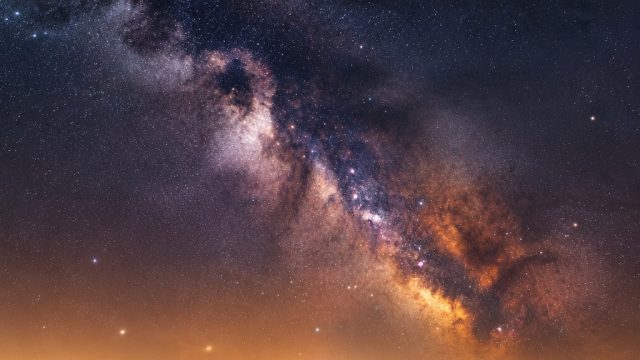
In an unprecedented achievement that has captured the attention of astronomers and space enthusiasts alike, the European Space Agency (ESA) has released stunning imagery of the Milky Way's core, showcasing over 60 million stars and 50 exoplanet systems. The data, collected by ESA's Euclid telescope, represents the largest and most detailed view of our galaxy's heart ever captured, marking a significant milestone in our understanding of the universe.
A Game-Changing Perspective
The release of these remarkable images comes at a pivotal time in the field of astronomy. As researchers strive to uncover the mysteries of star formation and planetary systems, the detailed view provided by Euclid offers critical insights that were previously unattainable. This extensive survey of the Milky Way's central region not only highlights the galaxy's dense star population but also plays a crucial role in understanding cosmic evolution.
Why This Matters Now
The timing of this revelation is significant for several reasons:
- Advancements in Technology: The capabilities of the Euclid telescope, which utilizes cutting-edge imaging technology, represent a leap forward in how we explore deep space.
- Understanding Cosmic Structures: With detailed images, astronomers can now analyze how stars and planets are distributed, leading to insights about the formation of galaxies.
- Engaging the Public: Such captivating visuals spark public interest in astronomy and space science, inspiring the next generation of scientists.
Exploring the Milky Way's Dense Core
The images reveal a chaotic yet beautiful environment within the Milky Way's core, densely packed with stars. This area is not only rich in stellar activity but is also thought to host a variety of celestial phenomena, including dense gas clouds and young star clusters.
Key Features Captured by Euclid
- Star Density: The high-resolution images show an incredible concentration of stars in the central region.
- Exoplanet Discovery: The identification of 50 potential exoplanet systems opens new avenues for research regarding the conditions for life beyond Earth.
- Galactic Dynamics: Observations will provide data that can help explain the gravitational interactions between stars and other celestial bodies.
Euclid's Ongoing Mission
This imagery is just the beginning of what Euclid aims to accomplish. As the telescope continues its mission, it will gather extensive data that could reshape our understanding of dark matter, dark energy, and the universe's expansion. The implications extend beyond simple observations; they challenge and refine existing theories in cosmology and astrophysics.
Impacts on Future Research
Researchers are excited about the potential discoveries that will emerge from Euclid's observations. The detailed mapping of stellar populations helps scientists formulate new hypotheses about the lifecycle of galaxies and the conditions necessary for planet formation.
Conclusion: A New Era in Astronomy
The release of these breathtaking images from ESA's Euclid telescope marks a significant moment in astronomical research. The ability to visualize the heart of the Milky Way with such detail opens new avenues for exploration and understanding of our universe. As we await further insights from this mission, one thing is clear: the beauty and complexity of our galaxy continue to inspire awe and curiosity, driving the quest for knowledge beyond our world.