
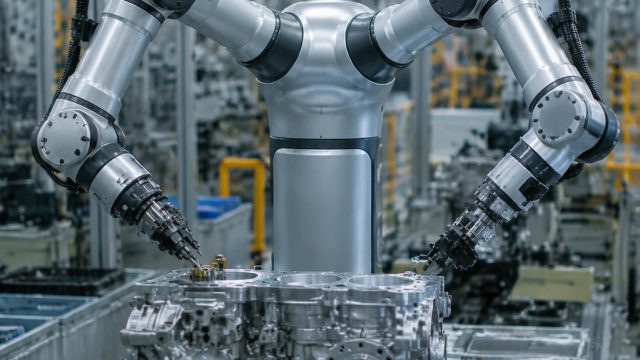
The Asia-Pacific region is experiencing a transformative wave in industrial automation, spearheaded by the growing adoption of collaborative dual-arm robots. As manufacturers and businesses strive for greater efficiency, these innovative machines are becoming essential tools in various sectors. Understanding this trend is crucial for stakeholders aiming to navigate the rapidly evolving technological landscape.
Understanding Collaborative Dual-Arm Robots
Collaborative dual-arm robots are designed to work alongside human operators, enhancing productivity while ensuring safety. Unlike traditional industrial robots that operate in isolation, these machines are equipped with advanced sensors and AI capabilities, allowing them to adapt to dynamic environments.
Key Features of Dual-Arm Robots
- Versatility: Capable of performing a range of tasks, from assembly to inspection.
- Intelligence: Equipped with machine learning algorithms that enable them to improve their efficiency over time.
- Safety: Designed to work in close proximity to humans, minimizing risks associated with automation.
Current Market Trends and Insights
As of late 2023, the market for collaborative dual-arm robots in the Asia-Pacific region is witnessing unprecedented growth. Factors contributing to this surge include:
Increased Demand for Automation
With businesses facing labor shortages and rising operational costs, the demand for automation solutions is escalating. Dual-arm robots provide a cost-effective way to optimize processes and enhance production capabilities.
Technological Advancements
The continuous evolution of AI and robotics technology is driving the development of more sophisticated dual-arm robots. These advancements are making these robots more accessible to small and medium-sized enterprises (SMEs), which were previously unable to invest in such technology.
Key Players in the Asia-Pacific Collaborative Robot Market
Several companies are at the forefront of this technological revolution, each contributing to the growth of collaborative dual-arm robots. Notable players include:
- Universal Robots: Known for its user-friendly interfaces and lightweight robots that facilitate easy programming.
- FANUC: Offers advanced automation solutions with a focus on precision and reliability.
- ABB: Pioneering in creating robots that collaborate seamlessly with human workers.
The Role of Government Initiatives
Governments across the Asia-Pacific region are implementing initiatives to promote automation and robotics. These policies are aimed at enhancing productivity and fostering innovation, providing businesses with financial support and guidelines for incorporating advanced technologies.
Challenges Facing the Industry
Despite the promising outlook for dual-arm robots, several challenges need to be addressed:
Workforce Resistance
As automation becomes more prevalent, there may be pushback from workers concerned about job displacement. Companies must engage in transparent communication and offer retraining programs to ease these concerns.
Initial Investment Costs
While operational costs may decrease over time, the initial investment in dual-arm robots can be substantial. Businesses need to weigh the long-term benefits against the upfront costs carefully.
Future Outlook: What Lies Ahead
As we look to the future, the potential for collaborative dual-arm robots in the Asia-Pacific market is vast. With ongoing advancements in technology and increasing acceptance of automation, experts predict sustained growth in this sector. Companies that embrace these technologies will be better positioned to thrive in a competitive global market.
In conclusion, the rise of collaborative dual-arm robots represents a significant shift in the Asia-Pacific region's industrial landscape. As stakeholders adapt to these changes, staying informed about market trends and technological advancements will be crucial for success. The integration of these sophisticated machines into workflows is not just a trend — it’s a necessary evolution in the quest for efficiency and productivity.