
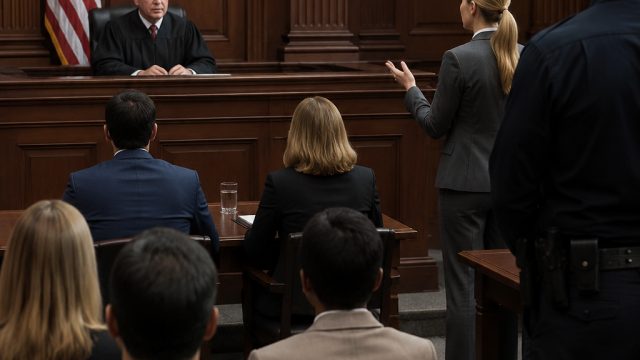
The landscape of immigration enforcement in the United States is undergoing a significant transformation following a recent court ruling. This landmark decision has immediate and far-reaching implications for how immigration policies are implemented, particularly regarding arrests made in U.S. immigration courts. As discussions around immigration continue to evolve, this ruling highlights the ongoing tension between federal enforcement agencies and judicial oversight.
Understanding the Court's Decision
A federal judge has recently issued a decision that prohibits U.S. Immigration and Customs Enforcement (ICE) agents from conducting arrests within immigration courtrooms. This ruling effectively vacates previous policies enacted during the Trump administration that allowed ICE to make arrests directly at court proceedings. The implications of this ruling are profound, as it changes the dynamic between immigrants seeking legal recourse and the enforcement mechanisms that have been in place.
Background on the Previous Policy
The former policy was designed under the premise of enhancing immigration enforcement, allowing ICE to detain individuals who were present at court for hearings or proceedings. However, critics of the policy argued that it created a climate of fear, discouraging individuals from attending essential court dates and seeking asylum or legal aid. The recent judicial ruling aims to restore a sense of safety and access to justice for immigrants.
Implications for Immigrants and Legal Representation
This ruling has substantial implications for both immigrants and their legal representatives. By preventing arrests within courtrooms, the decision aims to enhance the integrity of the judicial process. Immigrants may now feel more secure in attending their hearings, knowing that they are not at risk of immediate detention. This is especially crucial for those seeking asylum, as the ability to present their cases without fear is fundamental to their pursuit of safety.
- Increased Attendance: Immigrants may feel more encouraged to attend their court dates.
- Improved Legal Outcomes: Legal representation can become more effective in an environment free of intimidation.
- Focus on Fairness: The ruling emphasizes the importance of a fair trial.
The Role of Legal Advocacy
Legal advocates are praising the ruling as a step forward in protecting immigrant rights. They argue that the courtroom should remain a place for justice, not enforcement. With this ruling, advocates can work towards ensuring that immigrants can fully understand their rights and options without the looming threat of arrest. Moreover, this decision reinforces the principle that the court system should be an impartial venue for resolving disputes and not a site for immigration enforcement.
Political Reactions and Future Considerations
The ruling has sparked diverse reactions across the political spectrum. Supporters celebrate the decision as a victory for justice and human rights, while critics warn it could hinder immigration enforcement efforts. The Biden administration's approach to immigration has been markedly different from that of its predecessor, and this ruling aligns with its broader strategy to reform immigration policies.
Looking Ahead: Policy Changes
As the legal landscape continues to shift, stakeholders on all sides will be closely monitoring how this ruling affects immigration policy and enforcement in the coming months. Advocates are hopeful that this decision will pave the way for further reforms that prioritize equity and justice in the immigration system.
Conclusion: A New Chapter in Immigration Enforcement
The recent federal court ruling is a pivotal moment in the ongoing debate surrounding immigration enforcement in the United States. By prohibiting ICE from making arrests in immigration courts, the decision marks a significant shift towards a more humane approach to immigration policy. As the nation grapples with the complexities of immigration law, this ruling serves as a reminder of the importance of judicial oversight in protecting individual rights and ensuring fair access to the legal system for all. The effects of this ruling will undoubtedly resonate across the immigration landscape for years to come.