
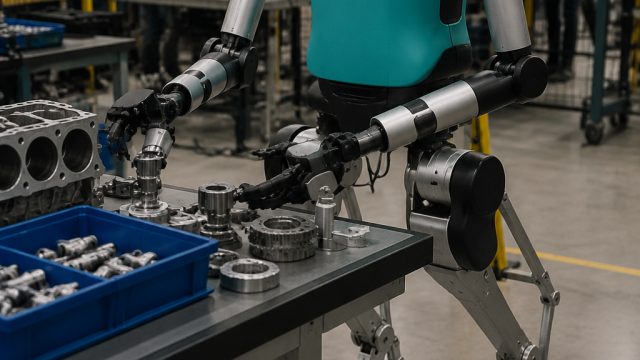
In a significant move poised to disrupt the robotics sector, Agility Robotics has announced plans to go public through a merger with a Special Purpose Acquisition Company (SPAC), valuing the company at $2.5 billion. Founded in 2015 as a spin-off from Oregon State University, Agility has made waves with its innovative humanoid robots designed for various applications, from logistics to healthcare.
The Rise of Agility Robotics
Agility Robotics has been at the forefront of developing robots that can navigate complex environments, mimicking human motion. Their flagship robot, Digit, is a remarkable feat of engineering, featuring advanced balance and mobility. This technology not only aids in automating mundane tasks but also opens up new realms of interaction between humans and machines.
From Concept to Reality
Starting from a research project at Oregon State University, Agility has transitioned into a commercial powerhouse. The company has secured notable partnerships, including collaborations with major enterprises interested in employing humanoid robots for various tasks. The anticipated SPAC merger is expected to furnish Agility with an influx of capital, facilitating further research and development.
The SPAC Merger Explained
A SPAC, or Special Purpose Acquisition Company, is a type of investment vehicle designed to take companies public without the traditional rigorous IPO process. This is advantageous for startups like Agility Robotics, which can leverage the SPAC's existing resources to accelerate growth. The merger is projected to yield approximately $620 million in net proceeds, which will be instrumental in enhancing their production capabilities and expanding their market reach.
Why Now?
The timing of Agility's public offering is particularly strategic. The demand for automation and intelligent robotics solutions has surged due to recent global events, including the COVID-19 pandemic. Companies are increasingly looking to robotics to enhance efficiency and address labor shortages across various sectors.
Implications for the Robotics Industry
Agility Robotics' move to go public is not merely a financial transaction; it signifies a pivotal moment for the robotics industry. As more companies pursue SPAC mergers, investors are showing a growing interest in technology that can reshape the workforce and redefine productivity.
Potential Impact on Employment
While automation often raises concerns about job displacement, Agility Robotics emphasizes the potential for collaboration between humans and machines. Their robots are designed to assist rather than replace workers, enabling them to focus on more complex and creative tasks. This shift could lead to new job creation in design, programming, and maintenance of robotic systems.
Looking Ahead: What’s Next for Agility Robotics?
As Agility Robotics embarks on this new chapter, the company is not just contemplating immediate financial gains but is also focused on sustainable growth and innovation. The funds raised from the SPAC merger will support ongoing projects aimed at enhancing the capabilities of their robots, including improving AI integration and expanding operational environments.
The Future of Humanoid Robotics
- Enhanced AI: Developing more intuitive interaction between humans and robots.
- Broader Applications: Exploring use cases in sectors like healthcare, logistics, and manufacturing.
- Global Expansion: Looking to enter international markets as demand grows.
Conclusion: A New Era for Robotics
The planned SPAC merger marks a new era for Agility Robotics and the humanoid robotics industry. As they prepare for life as a public company, the implications of their technology will resonate far beyond their immediate applications. Investors and industry experts are keenly watching how Agility leverages this opportunity to push the boundaries of innovation and redefine the future of work.