
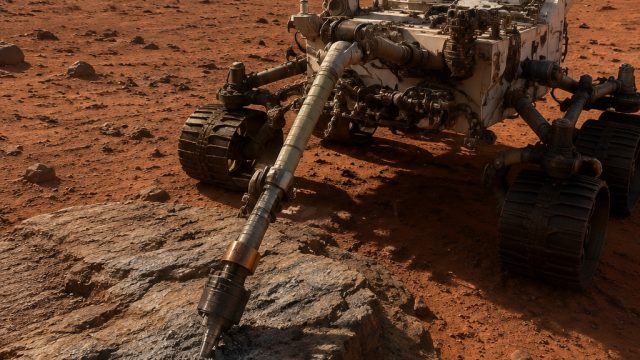
The quest to uncover the mysteries of Mars has taken a significant leap forward, as NASA's Perseverance rover has made groundbreaking discoveries that could hint at the presence of ancient microbial life on the Red Planet. This revelation is particularly exciting, as it not only sheds light on Mars' past but also enhances our understanding of life's potential beyond Earth.
Key Findings from the Perseverance Rover
Recent analyses conducted by Perseverance have unveiled complex carbon molecules embedded within Martian rocks, specifically in a region known as Jezero Crater. This crater is believed to have once housed a lake, providing a potentially suitable environment for life.
What Are These Carbon Molecules?
- Organic Compounds: The carbon molecules found are organic in nature, indicating that they could be linked to biological processes.
- Potential Signs of Life: While these findings do not confirm life, they pave the way for further investigation into the possibility of ancient organisms.
- Methodologies Used: The rover employed advanced scientific techniques to analyze the mineral composition of the rocks, revealing these intriguing organic signatures.
The Importance of These Discoveries
Understanding the presence of organic carbon on Mars is critical for several reasons:
- Historical Context: It provides a historical context for understanding how life might have originated and evolved on a planet with conditions similar to Earth.
- Future Missions: These findings will guide future missions and research aimed at exploring Mars’ surface and subsurface for more direct evidence of life.
- Comparative Analysis: Insights gained from these Martian discoveries can help scientists better understand the potential for life on other celestial bodies.
Challenges Ahead for Mars Exploration
While the recent findings are promising, several challenges remain in confirming the existence of ancient life on Mars:
Technological Hurdles
Developing advanced technologies capable of conducting in-depth analyses of Martian soil and rocks is crucial. As the missions advance, scientists must ensure that the tools they use can provide precise results.
Environmental Conditions
The harsh conditions on Mars, including radiation and extreme temperatures, pose risks to both equipment and the integrity of samples being studied.
Global Collaboration
Future expeditions to Mars will likely require international collaboration, combining resources and expertise to tackle the complexities of Martian research.
Looking Forward: The Next Steps
NASA's Perseverance rover is expected to continue its exploration and sampling efforts in the coming months. Furthermore, the upcoming ExoMars mission, set to launch soon, aims to complement these findings by looking for even more direct signs of ancient life.
The scientific community is buzzing with excitement, as each new discovery not only adds to our understanding of Mars but also raises profound questions about life beyond our planet. As we stand on the cusp of potentially groundbreaking findings, the implications of these discoveries could reshape our understanding of biology and the universe.
Conclusion
The recent discoveries made by NASA's Perseverance rover are monumental in the search for extraterrestrial life. As we delve deeper into Mars’ geological history, we inch closer to answering one of humanity's most profound questions: Are we alone in the universe? As the rover continues its mission, the excitement and anticipation grow for what secrets the Red Planet may still hold.